
26 Mar Designing Sessions That Move People: 10 Formats That Create Real Engagement
One of the most common questions we hear from event hosts is a deceptively simple one:
How do we make our sessions more engaging?
The answer almost always comes back to format.
Engagement does not happen by accident, and it rarely happens when participants are passive. The most effective events are intentionally designed so people do more than listen. They contribute, reflect, move, and connect. When session formats vary, energy stays high, learning feels active, and ideas last well beyond the final session.
Below are ten session formats we often recommend, along with what the experience feels like in the room and simple templates to guide thoughtful execution.
Workshop: Learning by Doing
Workshops are built for action. Instead of long presentations, the room moves through a clear rhythm of instruction, application, and discussion.
Participants are asked to engage right away by working through ideas or tools in real time, often alongside peers. Conversations fill the room, notes take shape, and progress happens before anyone walks out the door.
Sample Workshop Template
- 0 to 15 minutes: Concept overview and instructions
- 15 to 30 minutes: Individual or small‑group work
- 30 to 40 minutes: Group sharing and discussion
- 40 to 55 minutes: Next step or deeper application
- 55 to 60 minutes: Key takeaways and close
Panel: Conversation, Not Commentary
A strong panel feels inclusive and responsive rather than scripted.
Instead of saving interaction for the final moments, panelists invite audience participation throughout. Questions, reactions, and real‑world perspectives shape the discussion, keeping the conversation relevant and grounded.
Sample Panel Template
- 0 to 5 minutes: Moderator framing and goals
- 5 to 25 minutes: Guided discussion among panelists
- 25 to 40 minutes: Panelists pose questions to the audience
- 40 to 55 minutes: Open audience Q&A
- 55 to 60 minutes: Closing reflections
Hands‑On Demo: Learn It as You Use It
Hands‑on demos turn attendees into active participants.
With a QR code on screen, participants download a tool or access a platform and follow along step by step. The room becomes focused and collaborative, with questions arising naturally as people explore the tool together.
Sample Hands‑On Demo Template
- 0 to 5 minutes: Context and use case
- 5 to 10 minutes: Tool access via QR code
- 10 to 40 minutes: Guided walkthrough with checkpoints
- 40 to 55 minutes: Open practice and troubleshooting
- 55 to 60 minutes: Wrap‑up and next steps
Case Study Deep Dive: Inside Real Decisions
Case studies resonate most when they show the process, not just the outcome.
Participants walk through a real scenario, exploring the initial challenge, the paths considered, and the trade‑offs involved. Discussion around “what would you do differently?” invites reflection and shared learning.
Sample Case Study Template
- 0 to 10 minutes: Background and challenge
- 10 to 25 minutes: Decision points and execution
- 25 to 40 minutes: Results and lessons learned
- 40 to 55 minutes: Audience discussion and reflection
- 55 to 60 minutes: Key takeaways
Fireside Chat: Insight Through Conversation
Fireside chats remove unnecessary formality.
With a facilitator guiding the discussion, speakers share experiences and insights in a conversational setting. Audience questions are folded into the dialogue rather than held until the end, keeping the session fluid and engaged.
Sample Fireside Chat Template
- 0 to 5 minutes: Introduction and tone setting
- 5 to 40 minutes: Facilitated conversation
- 40 to 55 minutes: Audience questions
- 55 to 60 minutes: Closing insights
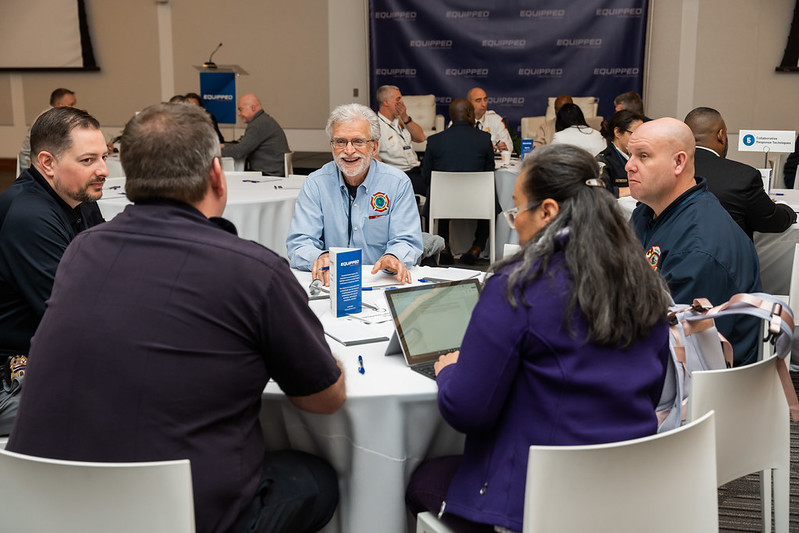
Roundtable Discussion: Collective Wisdom at Work
Roundtables put participants at the center.
Small groups gather around a shared topic or question, supported by a facilitator who keeps the discussion focused. The emphasis is on peer exchange and practical insight drawn from experience.
Sample Roundtable Template
- 0 to 10 minutes: Topic framing and instructions
- 10 to 40 minutes: Table discussion
- 40 to 55 minutes: Report‑outs or theme sharing
- 55 to 60 minutes: Synthesis and close
Lightning Talks: Energy in Motion
Lightning talks keep sessions moving.
With short, clearly defined time limits, speakers focus on a single idea. The audience stays engaged as perspectives rotate quickly and content remains concise.
Sample Lightning Talk Template
- 5 to 7 minutes per speaker
- 4 to 6 speakers per session
- Optional 10 to 15 minute group Q&A
Interactive Polling Session: Participation in Real Time
Interactive polling keeps participants involved throughout the session.
Questions appear on screen, responses come in instantly, and results guide the conversation as it unfolds. The audience sees how their perspectives align or differ, which naturally prompts discussion.
Sample Polling Session Template
- Opening poll to set context
- Poll questions integrated throughout
- Real‑time discussion of results
- Final reflection poll and close
Problem‑Solving Lab: From Challenge to Clarity
Problem‑solving labs center on shared challenges.
After defining the issue, participants work individually or in groups to explore solutions. Ideas are shared back with the room, revealing patterns and practical approaches grounded in real experience.
Sample Problem‑Solving Template
- 0 to 10 minutes: Define the challenge
- 10 to 35 minutes: Group work
- 35 to 55 minutes: Solution sharing
- 55 to 60 minutes: Key takeaways
Debate or Pro/Con Session: Exploring Different Perspectives
Debate sessions embrace complexity.
Speakers present differing viewpoints on a topic, followed by audience questions, discussion, or live voting. This format encourages critical thinking and works particularly well for emerging issues or evolving practices.
Sample Debate Template
- 0 to 5 minutes: Topic framing
- 5 to 20 minutes: Opening arguments
- 20 to 40 minutes: Rebuttals and discussion
- 40 to 55 minutes: Audience input and voting
- 55 to 60 minutes: Closing statements
Designing with Intention
The most effective events are not built around a single session style. They are designed with a thoughtful mix of experiences that invite participation in different ways.
At JDC Events, we believe engagement is planned. When session formats support connection, conversation, and contribution, gatherings become meaningful experiences that stay with people long after the room clears.

Kara Dao is the Chief Operating Officer at JDC Events. She has a degree from George Mason University and over 2 decades of leadership and executive experience in the events industry. Kara is certified by the Institution of Occupational Safety and Health, has her Certification in Exhibition Management (CEM) and has served as a Mentor for the International Association of Exhibitions and Events (IAEE).