



20 Mar Successful Onsite Team Structure
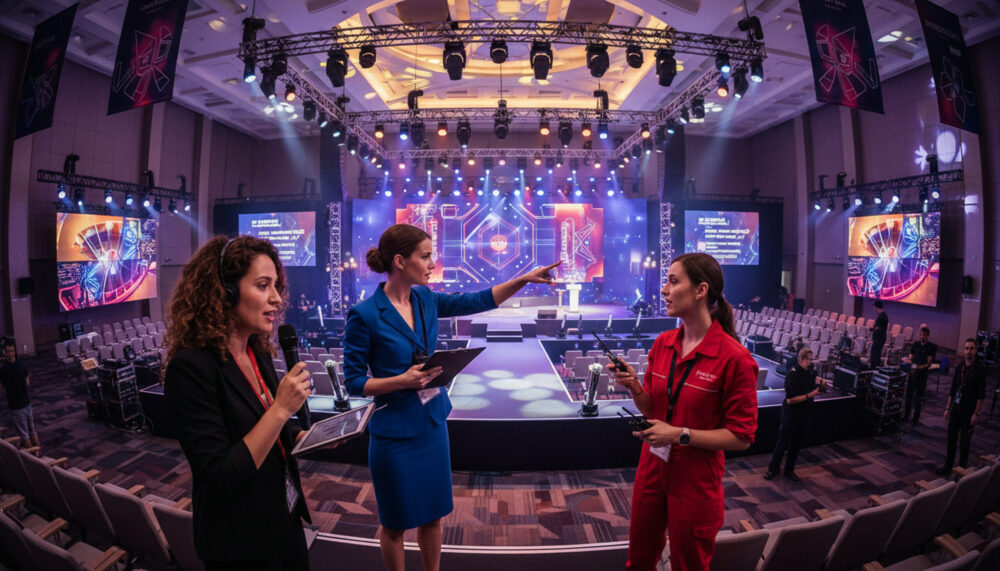
No matter how much preparation happens in advance, events are ultimately defined by what takes place onsite. Conferences, tradeshows, board meetings, corporate showcases, internal meetings, and executive gatherings all rely on coordinated execution once doors open and attendees arrive. Onsite event services provide the structure needed to manage people, timing, and logistics in real time.
Onsite Event Services That Support Successful Events
These services are not limited to large scale productions. Even smaller meetings and offsite programs benefit from clear roles, experienced staff, and defined processes. Understanding the core onsite services that support live events helps explain how events stay organized, adaptable, and on schedule.
Registration Management
Registration is the first operational touchpoint for most attendees. Onsite registration management includes check in flow, badge distribution, line management, and issue resolution. It also requires coordination with registration platforms, databases, and event credentials.
A well managed registration area adapts to arrival patterns throughout the day. Staff monitor traffic, adjust as needed, and serve as a primary information resource for attendees. For conferences and tradeshows, registration management plays an important role in maintaining attendee flow and minimizing early disruptions.
Show Calling
Show calling provides centralized oversight for events with structured programming. This service is commonly used for conferences, general sessions, corporate showcases, and large internal meetings. The show caller manages the run of show and coordinates timing across speakers, production teams, and event leadership.
Responsibilities include cueing presenters, tracking agenda timing, and managing transitions between program elements. Show callers also respond to real time changes, such as speaker delays or content adjustments, while keeping the program aligned with overall objectives.
Stage Management
Stage management focuses on the activity surrounding speakers and presenters. This includes speaker check in, backstage coordination, presentation readiness, and communication with audiovisual teams. Stage managers ensure that presenters understand where to be, when to arrive, and how to move through the space.
For events with multiple speakers or sessions, stage management reduces uncertainty and supports consistent transitions. This role allows presenters to focus on delivery rather than logistics and contributes to a more controlled program environment.
Transportation Management
Transportation management supports the movement of people between venues, hotels, and offsite locations. This service is particularly relevant for conferences, executive meetings, and corporate events with VIP attendees or multiple locations.
Responsibilities include scheduling, arrival coordination, communication with drivers, and onsite oversight. Clear transportation management helps prevent delays that can impact agendas and ensures that participants arrive informed and prepared.
Offsite Event Management
Many events include offsite components such as receptions, dinners, tours, or special experiences. Offsite event management provides oversight for these activities to ensure consistency with the main event.
This service includes coordinating vendors, managing staff, overseeing timelines, and acting as the onsite point of contact. Offsite events benefit from the same level of planning and staffing as primary programming, particularly when multiple locations or partners are involved.
Tradeshow Hall Management
Tradeshow hall management focuses on the exhibitor and attendee experience within the exhibit space. Responsibilities include overseeing move in and move out schedules, supporting exhibitors, managing show floor hours, and addressing operational issues.
For tradeshows, expos, and conferences with exhibit halls, this role helps maintain order and provides a clear point of contact for exhibitors. Effective tradeshow hall management supports both operational efficiency and overall event flow.
Breakouts and Ancillary Event Management
Breakout sessions and ancillary events often run alongside main programming and require dedicated oversight. This includes room checks, speaker support, timing management, and coordination with audiovisual teams.
For conferences and educational programs, consistent management across breakout sessions helps ensure that attendees have a reliable experience regardless of which sessions they attend. It also allows organizers to maintain schedule integrity across multiple rooms.
Staffing and Role Clarity
Onsite event services depend on having experienced staff assigned to clearly defined roles. Professional event teams provide individuals trained to work in live environments, communicate effectively, and adapt to changing conditions.
Each team member is assigned specific responsibilities and reporting lines. This structure supports accountability and allows issues to be addressed efficiently without confusion or overlap.
Preparation and Process
Strong onsite execution begins with preparation. The process typically starts with a discovery call to understand event format, scope, hours required, and tools already in place. This conversation helps determine staffing needs and operational priorities.
From there, a detailed staff briefing document is developed in collaboration with the client. This document outlines roles, schedules, timing, and reporting structure. An onboarding call with the client and onsite staff provides an opportunity to review the full scope of work and discuss event specific nuances.
When the team arrives onsite, they do so with a shared understanding of expectations and responsibilities. Preparation and documentation support confident execution and reduce the need for reactive decision making.
The Role of Onsite Event Services
Live events involve constant coordination across people, spaces, and schedules. Onsite event services provide the operational framework that allows events to function as planned. By assigning experienced professionals to manage key areas, conferences, tradeshows, board meetings, and corporate events are better positioned to operate efficiently and adapt as needed.
Understanding these services helps clarify how successful events are supported once planning transitions into execution.

JDC Events is a Washington, D.C.-based event management firm with 25+ years of experience serving corporate, government, and association clients. Named a top 25 meeting and event planning company in the D.C. region for 14 consecutive years, JDC combines strategic thinking with its proprietary EventScience™ Process to create experiences that drive real business outcomes.